

Introduction
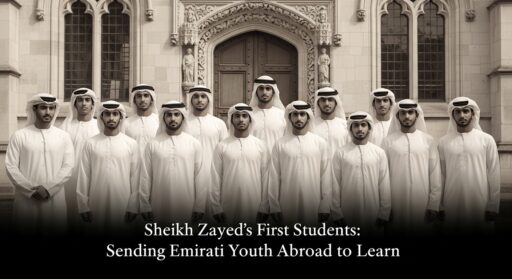
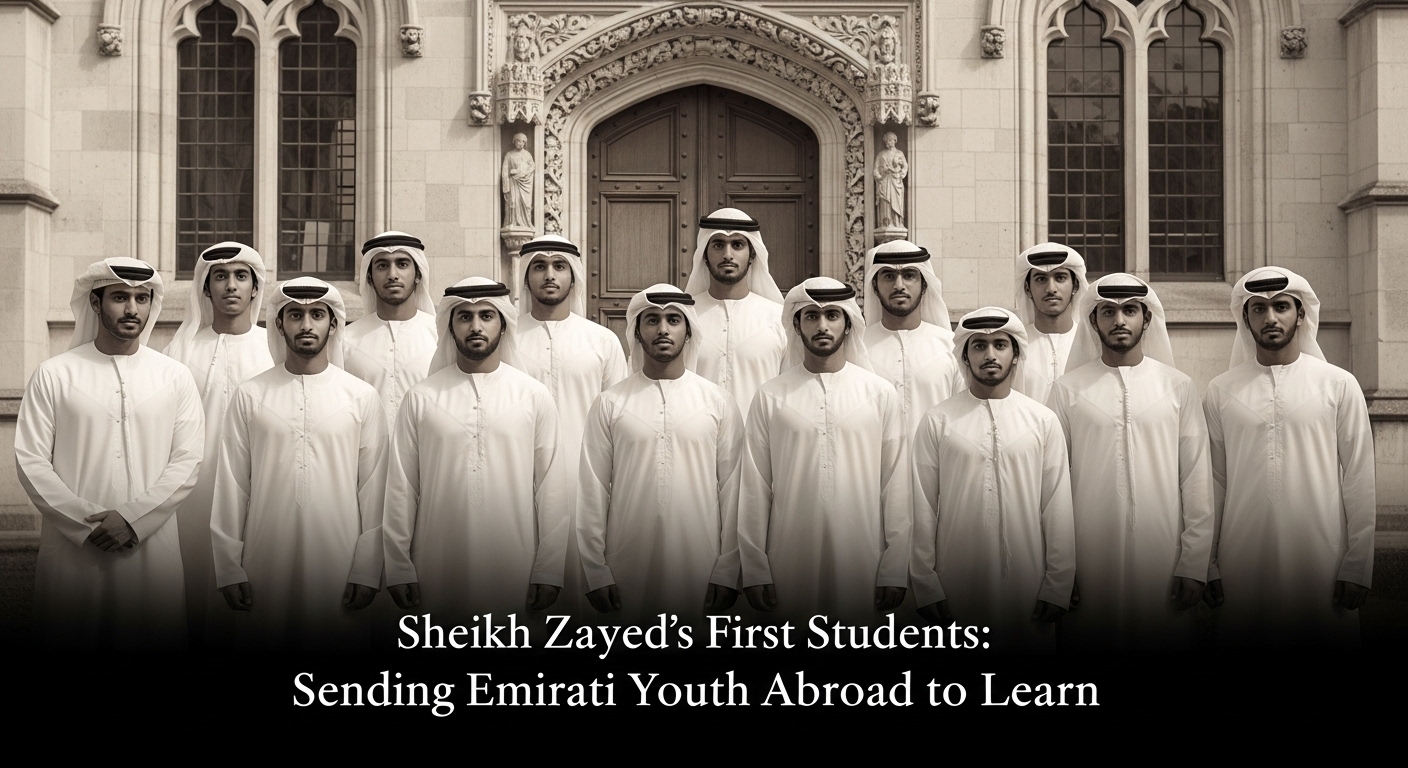
In the early 1960s, even before the union was conceived, a quiet but revolutionary program began under the direction of Sheikh Zayed bin Sultan Al Nahyan, then the Ruler’s Representative in Al Ain. Recognizing that the nascent local schools could not yet provide the advanced technical and academic expertise needed to develop the region, he made a bold decision: to send the brightest young Emirati men abroad for education. These pioneers, “Sheikh Zayed’s First Students,” were entrusted with a monumental task: to acquire the knowledge of the modern world and bring it home to build their nation. Their journey marked the beginning of the UAE’s strategic investment in human capital as the ultimate resource.
History
The program started on a small scale. The first groups, consisting of a few dozen young men, were sent to countries like Bahrain, Kuwait, Qatar, and Egypt, which had more established educational systems. The goal was practical and urgent: to train teachers, engineers, doctors, and administrators. Upon becoming Ruler of Abu Dhabi in 1966 and later President of the UAE in 1971, Sheikh Zayed dramatically expanded the program. Hundreds, and then thousands, of students were sent on scholarships to universities across the Arab world, the United Kingdom, and the United States. This initiative was a cornerstone of his development philosophy, believing that “The greatest use that can be made of wealth is to invest it in creating generations of educated and trained people.”
Key Features
This scholarship program was characterized by its strategic focus and profound sense of mission:
- Strategic Selection: Students were often selected for specific fields critical to national development, such as petroleum engineering, medicine, education, and public administration. It was a state-planned investment in human capital.
- A Heavy Responsibility: These young men (and later, women) were acutely aware that they were not studying for themselves alone. They were the “hope of the nation,” tasked with returning to fill crucial roles in a country that had almost no national professionals.
- Cultural Immersion and Challenge: For many, it was their first time leaving the Gulf. They faced significant cultural and academic challenges, from adapting to a new climate and language to excelling in rigorous foreign university systems.
- A Formative Experience: Living abroad broadened their horizons dramatically. They returned not only with degrees but with a global perspective, new ideas about governance, and an understanding of how modern nations functioned.
Cultural Significance
The act of sending youth abroad was a powerful demonstration of trust and a break with tradition. It showed that the leadership believed in the potential of its young people to engage with the world and return to lead. For the students themselves, the experience was transformative, forging a deep, personal loyalty to Sheikh Zayed and the nascent union. They returned as a new class of professionals—the first generation of modern Emirati experts. Their success validated the gamble and helped build domestic confidence in the federal project, proving that Emiratis could compete on a global stage.
Modern Relevance
The impact of this program is immeasurable. The returnees formed the core of the UAE’s first professional civil service, staffed the newly created ministries, taught in the expanding school system, and managed the burgeoning oil industry. They became the deans of the first universities, the directors of the first hospitals, and the ambassadors to the first foreign missions. In essence, they built the institutional framework of the state. This model of strategic overseas scholarship continues today, though on a different scale, with the UAE government and institutions like the Abu Dhabi Crown Prince Court’s Scholarship Program sending top students to the world’s best universities, ensuring a continuous pipeline of globally-trained talent.
Conclusion
“Sheikh Zayed’s First Students” were the human bridges between the UAE’s past and its future. They left as boys from a quiet corner of the Gulf and returned as the architects of a modern nation. Their story is one of courage, sacrifice, and an unwavering sense of duty. The knowledge they brought back was the most valuable import in the nation’s history, more critical than any piece of machinery or infrastructure. The skyscrapers and universities that define the modern UAE stand as monuments not just to financial investment, but to the far-sighted wisdom of a leader who knew that a nation’s true wealth lies in the minds of its people.